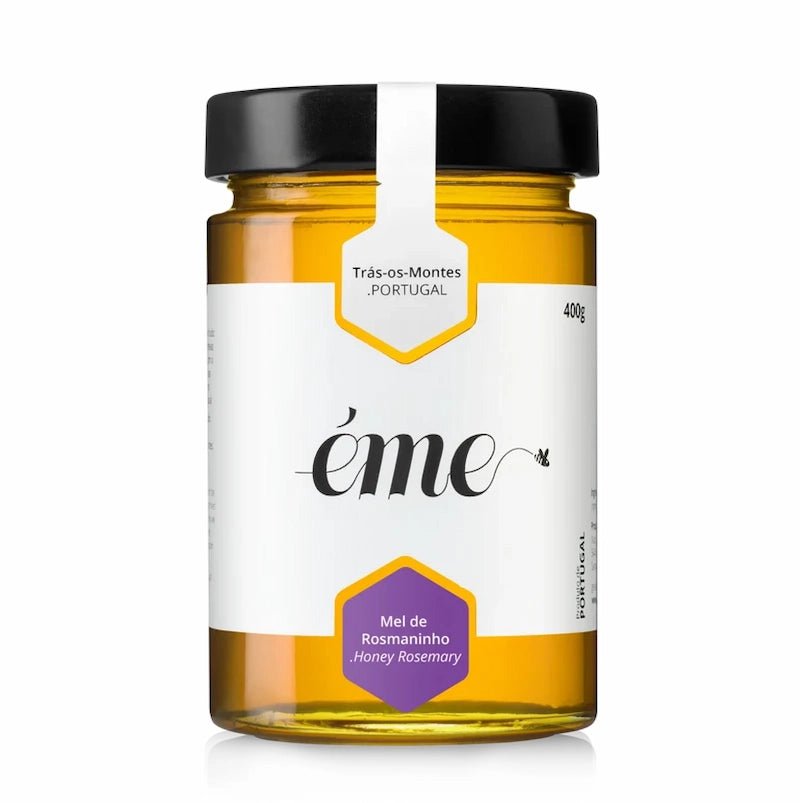
Raw lavender honey Éme 400 g from Portugal
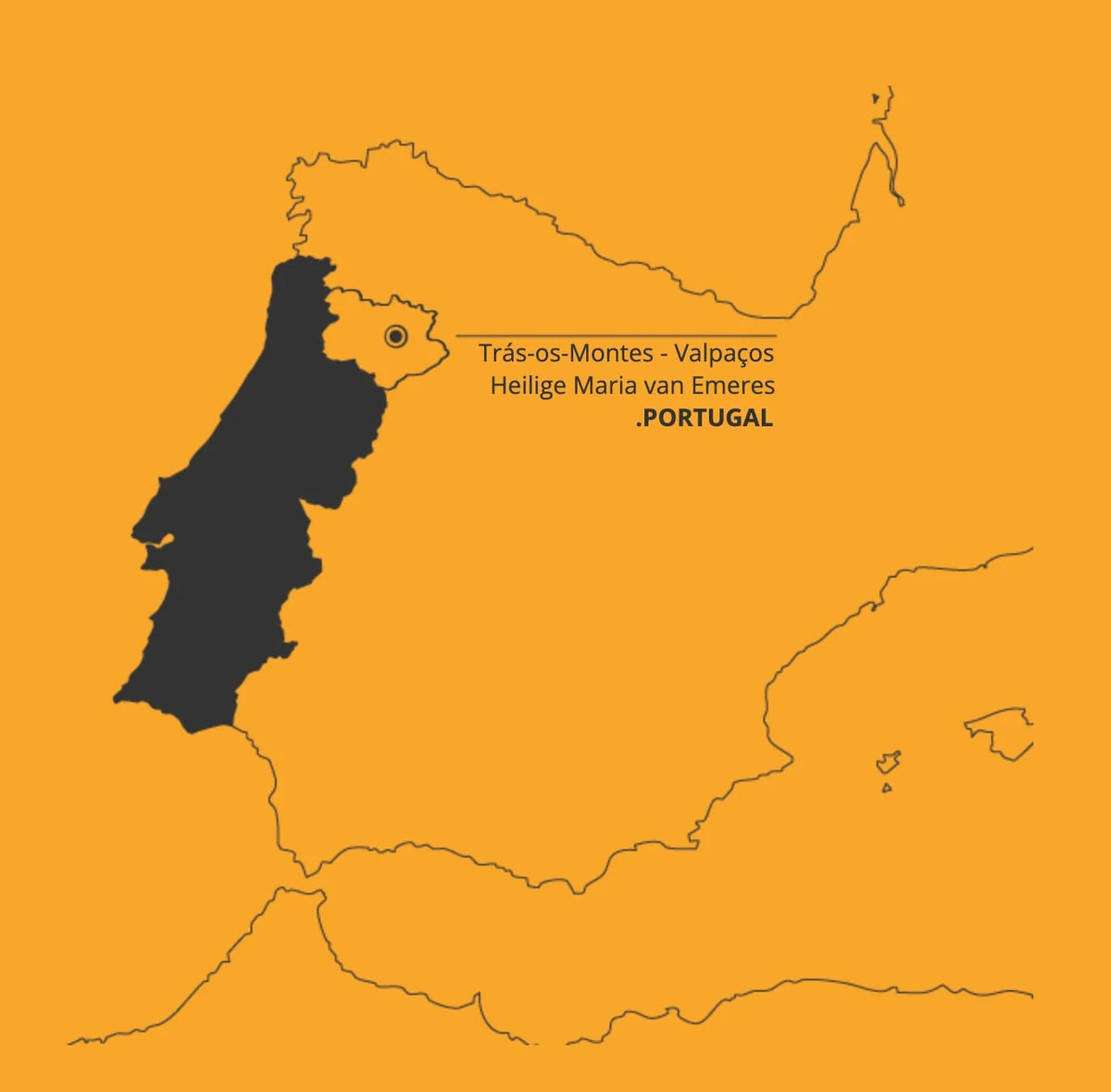
Raw lavender honey from Éme in Trás-os-Montes, Portugal. This honey comes from the mountainous north of Portugal, where wild lavender grows at an altitude of around 400 metres, among forests, open countryside and clean mountain air. Raw means it is spun cold, not heated and minimally processed. 400 g jar.
Smaak: Round and mild, with a floral aroma and subtle spiciness. A true floral honey.
Gebruik: Tasty on bread, mixed with yogurt or quark, fresh fruit and (goat) cheese and nuts. Very suitable for dressings, marinades, bread with butter and hot dishes.
Couldn't load pickup availability

Herkomst en achtergrond
This raw honey comes from Éme in Santa Maria de Émeres, near Valpaços in Trás-os-Montes, northern Portugal. A mountainous, sparsely populated region with forests, open countryside and clean mountain air.
In Portugal, this honey from wild lavender plants is known as 'mel de rosmaninho'. This lavender grows at an altitude of around 400 metres and generally blooms from February to June. The nectar from this lavender gives the honey its distinctive character: soft, rounded, delicately floral, mild and very pale yellow to almost transparent.
Éme works on a small scale, in close harmony with the natural environment of Trás-os-Montes. The honey is cold-extracted, not heated and minimally processed. This preserves its purity and clear origin: from a single producer, in one distinctive region.
Directly from the traditional Portuguese beekeeper.
Éme uses traditional beekeeping methods, with the welfare of the bees, the rhythms of nature and environmental sustainability at the heart of everything they do.
Smaak & gebruik
Lavender honey is naturally light and almost transparent in colour, with a round, soft and mild flavour. Although the bees use lavender plants to make this honey, it does not taste particularly of lavender. The flavour is delicately floral and refined.
Use it on bread, in yoghurt or quark, with nuts or with cheese. It pairs particularly well with cheeses with a bit of character, such as aged cheese, goat cheese or blue cheese.
Thanks to its soft, refined flavour and subtle floral aromas, this Portuguese wild lavender honey is surprisingly versatile. Delicious over creamy yoghurt, fresh fruit or a piece of goat cheese or ricotta. Its delicate character also comes beautifully to the fore with fresh figs, panna cotta and other light desserts.
Also try it in a dressing with lemon juice and a fruity extra virgin olive oil, or as a subtle sweet touch with roasted carrots. Even a simple slice of bread with butter becomes something special with a little of this honey.
When adding the honey to hot preparations, it is best to add it a little later, so that the flavour remains beautiful and it does not caramelise too much.
It can, of course, also be used in tea. Absolutely. If you want to preserve the natural enzymes and delicate aromas of raw honey as much as possible, it is best to add the honey when the dish or drink has cooled slightly. Studies show that even at 80 °C for 15 minutes there was no major decline in quality, although the enzyme activity did decrease slightly. So there is no strict temperature limit, but cooler is better.
If you mainly use honey as a sweetener, then hot tea is not a problem. The use of stainless steel spoons is not an issue at all. See below in the frequently asked questions.
Kwaliteit & analyse
This honey is raw, cold-extracted, and unprocessed. It is therefore not heated or industrially filtered. As a result, the honey remains closer to the product as the beekeeper takes it from the comb: with natural variations in color, texture, aroma, and crystallization.
This is unprocessed, cold-extracted, raw, pure, and unadulterated honey.
As many nutrients as possible are preserved.
Pristine environment.
Santa Maria de Emeres is located in an area with minimal industrial activity and excellent air quality, which contributes to the purity of the honey.
Thanks to the clean air, pristine nature, and absence of industry, Santa Maria de Emeres offers ideal conditions for bees. This ensures that Eme honey not only tastes delicious, but is also less exposed to harmful substances and fits perfectly into a conscious, natural lifestyle.
Over de bloemetjes en de bijtjes en Chinees suikerwater.
Productdetails
Contents
400 g
Origin
Santa Maria de Emeres, Northern Portugal
Altitude of beehives
Approx. 400 meters
Producer
Eme – artisanal Portuguese beekeeper
Type honey
This special honey is extracted from the nectar of Lavandula stoechas, a wild lavender species known in Portugal as rosmaninho. Contrary to what the English translation on the label might suggest, this is not rosemary, but a Mediterranean lavender species.
Extraction
Raw, cold-extracted, unprocessed
Heating
Not heated
Filtering
Unfiltered
Colour
Light, transparent
Taste
Soft, slightly floral, mild
Storage advice
Store in a cool, dark place
Best before
Honey sealed in the jar and stored in a dark, dry, and cool place remains good for many years. Much longer than the best-before date required in the EU, which is usually 2–3 years after bottling.
This is a legal formality and not a strict expiry date. After this date, honey is still safe to eat; its taste, colour, or texture may gradually change, but this is not due to spoilage. Honey found in Egyptian tombs has been found to be still edible after thousands of years.
Veelgestelde vragen
What does it mean that this honey is raw?
Raw means that the honey is not heated and is processed as little as possible. This honey is cold-filtered, which keeps it closer to the honey as the beekeeper takes it from the comb. Natural differences in color, taste, and texture are therefore possible.
What does Mel de Rosmaninho mean?
This special honey is obtained from the nectar of Lavandula stoechas, a wild lavender species known in Portugal as rosmaninho. Contrary to what the English translation "rosemary" on the label might suggest, this is not rosemary, but a Mediterranean lavender species. Rosemary is related to lavender (but they belong to different genera).
Why does it say "rosemary" on the label? Isn't that rosemary?
The Portuguese dictionary Infopédia states that rosmaninho is used for both Lavandula stoechas and, in some contexts, for real rosemary. This probably explains the English translation Rosemary Honey.
Why does this honey come from the higher parts of the region?
Éme's wild lavender grows at an altitude of approximately 400 meters.
When does the lavender for this honey bloom?
The wild stoechas lavender blooms from February to June. That is the period during which the bees can collect nectar from this plant.
Why is origin important for honey?
Because unfortunately, honey is a product that is often blended, heated, filtered, and traded without a clear origin. In the supermarket, the label often says “blend of EU and non-EU honey.” That tells the customer very little. This honey comes from Éme in Santa Maria de Émeres, near Valpaços in Trás-os-Montes. One producer, one recognizable region, one clear type of honey.
Is this honey comparable to cheap supermarket honey?
No. Much (cheap) honey is anonymous blended honey, often originating from multiple countries and almost always heated, heavily filtered, or otherwise processed. Éme's honey comes from a single producer in northern Portugal. As little processing as possible, and never heated, for truly pure honey. That is exactly the difference.
Why does honey sometimes become thick or grainy?
That is crystallization. It is a natural process and says nothing negative about the quality. Raw honey can become firmer, thicker, or grainier over time.
How can I make crystallized honey liquid again?
Stir the honey gently if you want to make it creamier. If you want to make it more liquid, place the closed jar in a lukewarm water bath. It is better not to heat honey above 40 degrees Celsius so that its aroma, taste, and raw character are preserved as much as possible.
Can I use this honey in hot dishes?
Yes, you can. It is best to add the honey to hot preparations a little later. This preserves the taste better and prevents the honey from caramelizing too much.
Can I put honey in hot tea?
Yes, of course. You can easily add honey to hot tea or use it in hot dishes. If you want to preserve the natural enzymes and delicate aromas of raw honey as much as possible, it is best to add the honey when the dish or drink has cooled slightly. Studies show that even at 80 °C for 15 minutes, there was no major decline in quality, although enzyme activity did decrease slightly. So there is no strict temperature limit, but cooler is better.
Should I use a wooden spoon?
No. A regular stainless steel spoon or a bread knife is perfectly fine. The idea that modern stainless steel directly affects honey is incorrect. Beekeepers themselves use stainless steel materials when processing and filling honey. Above all, use a clean, dry spoon.
Is honey suitable for babies?
No. Honey is not suitable for children under 1 year of age. Honey may contain traces of the bacterium Clostridium botulinum. Because a baby's gut flora is not yet sufficiently developed, these spores can cause infant botulism, a rare but serious condition. This applies to all honey, including heated honey.
How long does honey last?
Honey is one of the few foods that are, in principle, edible for many years or even almost indefinitely. This is due to the unique composition of honey: it contains little water, has a natural acidity, and naturally possesses antibacterial properties. This makes it very difficult for bacteria and fungi to develop.
Honey jars have even been found in Egyptian tombs thousands of years old that still turned out to be edible. This underscores how exceptionally stable honey is by nature.
Honey still has a best-before date on it. This date is legally required and does not indicate a strict expiration limit. Honey is still safe to consume after the best-before date. However, its color, taste, or texture may slowly change over time. A common change is crystallization. This is a completely natural process.
Our top-rated olive oils
-
Organic Extra Virgin Olive Oil Caixeiro Bag in box Portugal
4.8444 / 5.0
(45) 45 total reviews
Regular price From €39,00 EURRegular priceUnit price €19,50/LSale price From €39,00 EUR -
Caixeiro Signature Organic Extra Virgin Olive Oil 500ml Portugal
4.6 / 5.0
(10) 10 total reviews
Regular price €20,00 EURRegular priceUnit price €40,00/L€0,00 EURSale price €20,00 EUR -
Organic Extra Virgin Olive Oil Health Claim 500 ml Italy
4.8182 / 5.0
(11) 11 total reviews
Regular price €23,00 EURRegular priceUnit price €46,00/L€0,00 EURSale price €23,00 EURSold out -
Organic Extra Virgin Olive Oil Health Claim 500ml Blend Greece
5.0 / 5.0
(5) 5 total reviews
Regular price €30,00 EURRegular priceUnit price €60,00/LSale price €30,00 EUR