1. Made with real truffle, not synthetic flavors
Truffle-infused olive oil is notorious for (almost) never containing real truffles. This fake oil is usually made by mixing regular olive oil (often poor-quality olive oil) with a chemically produced flavoring that imitates the truffle flavor.
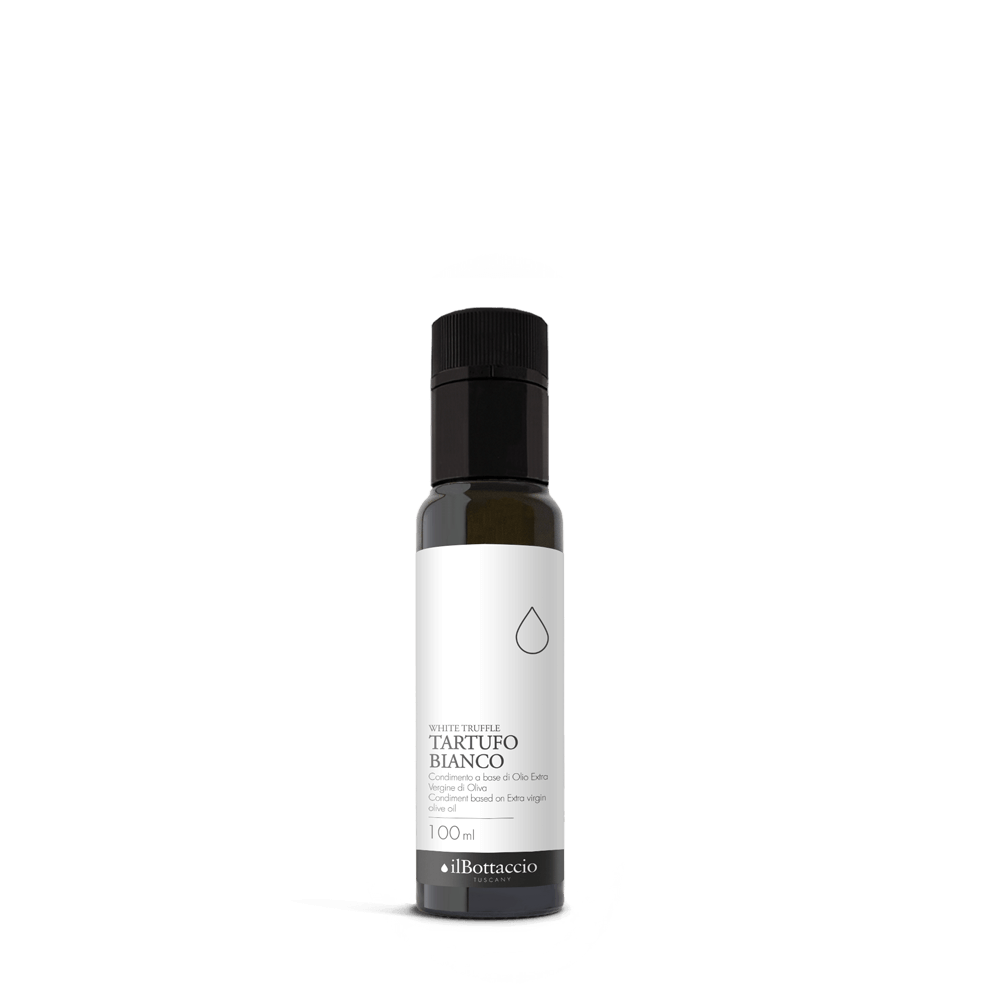
This truffle oil, on the other hand, is made by infusing real truffles in extra virgin olive oil. This is more labor-intensive, more expensive, and less stable—but it's the only process that produces an authentic truffle aroma .
2. You can taste the difference immediately
Real truffles have a deeper, rounder, and more complex aroma. You can smell and taste the difference immediately, especially for those familiar with fresh white truffles. Synthetic truffle oil often smells sharp and overpowering, too much like garlic, and, if you smell closely, a hint of vomit. This is clearly fake truffle oil made from a petroleum derivative.
3. Extra virgin olive oil as a carrier, not as an afterthought
The base of this oil is a good extra virgin olive oil from Tuscany . This is important because truffles enhance what's already in the oil. A poor base oil will never produce a good result.
Here the olive oil has a supportive effect: it carries the aroma without suppressing it.
4. Intended for those who want to taste the difference
This is not a truffle oil to make everything “taste like truffle”.
This is an oil for those who:
- know what real truffle smells and tastes like
- subtle dosage appreciates
- prefer less use, but quality
A small bottle, meant for conscious use —in the literal, practical sense: you use it with purpose. It's also a small bottle because, like real white truffles, the aroma and flavor dissipate quickly.
This oil is a “truffle flavouring” and a culinary refinement .
Frequently Asked Questions
Does this truffle oil contain real truffles or a synthetic aroma?
This truffle oil is made with real truffle flavoring , not synthetic truffle flavoring. This means the flavor comes from real truffles and not the common chemical found in most supermarket truffle oils.
What is the difference with truffle oil from the supermarket?
Most truffle oils in the supermarket do not contain truffle , but a synthetic flavoring that imitates one of the truffle's scent components.
This oil therefore often has a sharp, dominant odor that has little complexity.
This truffle oil has a deeper, rounder, and more complex aroma , just like you'd expect from real truffles. You'll smell and taste the difference immediately.
Can I heat this truffle oil?
No. This truffle oil is intended for cold use only .
Heating quickly dissipates and destroys the truffle aroma. Therefore, always use this oil after cooking as a finishing touch.
How do I best use truffle oil?
Use truffle oil on your dish after preparation .
This oil is very suitable:
- about pasta and risotto
- with eggs over potato dishes
- with cheese, burrata or carpaccio
- over pizza or vegetables after preparation
Why is this truffle oil in a small 100ml bottle?
Because truffle oil is n't an everyday cooking oil , the aroma and flavor fade over time (sometimes as early as a month after opening the bottle), just like with a real white truffle.
It's a concentrated product that you use in small quantities. A smaller bottle ensures the oil stays fresh and optimally preserves its aroma.
What is the best way to store this truffle oil?
Store the oil:
- well closed
- out of direct sunlight
- in a cool, dark place
Once opened, use within a few weeks or months so that the truffle aroma retains its intensity.
Who is this truffle oil intended for?
This truffle oil is intended for people who:
- know the difference between real and synthetic truffle flavor
- appreciate subtle dosing
- use truffle as a refinement, not as a dominant flavor
This is not an “all-truffle” oil, but a targeted finishing oil .
More background
The substance 2,4-dithiapentane is what gives real truffles their distinctive smell and flavor in nature. But real truffles aren't cheap, they evaporate quickly, and because they don't contain oil, they can't be pressed, just like mushrooms.
The vast majority of truffle oils on the market are made with a synthetic flavoring similar to 2,4-dithiapentane. This substance approximates a single truffle aroma component, but lacks the complexity and finesse of true truffles.
Capturing the aroma and flavour of a real truffle and putting it into olive oil requires a bit more effort and patience.
Production of real truffle aroma
What is fake truffle oil?
The fake oils are usually made by mixing regular olive oil (often very poor quality olive oil) with a chemically produced flavoring that imitates the truffle taste.
The substance 2,4-dithiapentane is what gives the true truffle its distinctive smell and flavor in nature. The chemical industry can replicate 2,4-dithiapentane from petroleum. How this is done is explained below.
The chemical 2,4-dithiapentane is much easier to incorporate into food products and doesn't evaporate as quickly as the real thing. However, those with a keen nose who are familiar with the aroma of real truffles will recognize it quite quickly. If you smell closely, you'll notice that the fake is slightly sharper, and while it does smell like truffles, it's a bit too much like garlic, and you'll miss the elegant complexity, finesse, and depth of real truffles.
The use of artificial truffle flavorings in olive oil is primarily due to the high cost and limited availability of real truffles, especially the most sought-after varieties like white truffles. Adding chemical truffle flavorings makes the product more affordable and more widely accessible to consumers. Artificial truffle oil resembles truffles, but it doesn't offer anywhere near the same complexity and depth of flavor as real truffle oil.